Why Professional Equipment Changes Everything (And Why Your Phone Can’t Match It)
Let me be real with you — your phone shoots great video. For social media stories, quick updates, and casual content, it’s more than enough. I’m not here to tell you your phone is bad.
But when you’re creating a promotional video that represents your business, a documentary that preserves someone’s story, or event coverage that needs to look cinematic — the gap between phone footage and professional equipment isn’t a small one. It’s enormous.
Here’s why, in plain language:
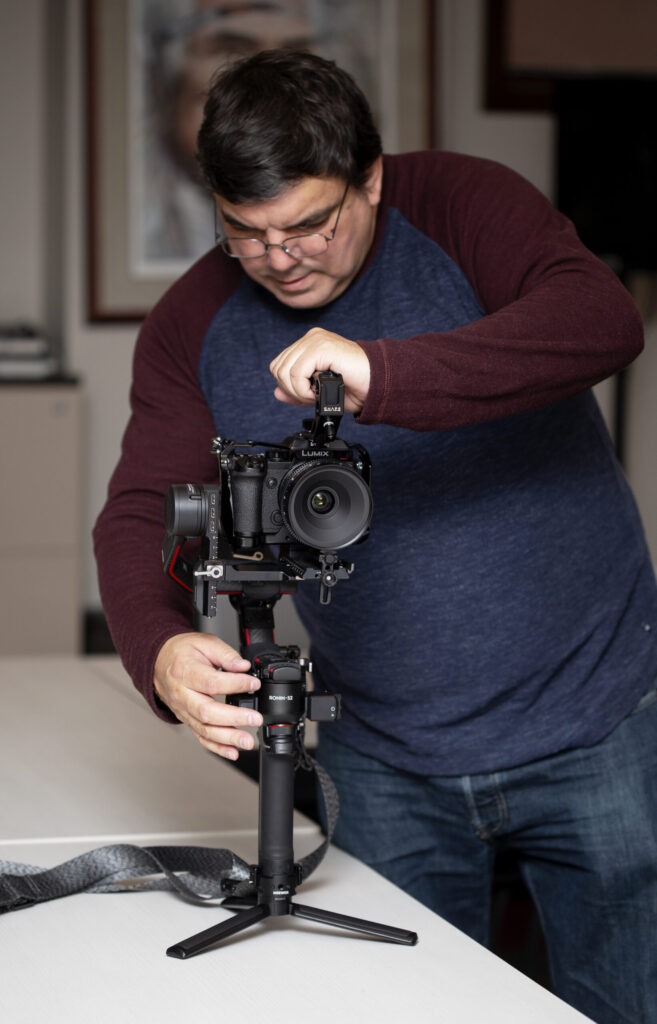
The sensor is the heart of every camera. It’s the thing that actually captures light. The cameras I use at SwanSong Productions have a 35mm × 24mm full-frame sensor. Your iPhone? About 6mm × 4.5mm. Even the latest iPhone maxes out at roughly 9mm.
That’s not a subtle difference. My sensor captures nearly 30 times more light information than a phone. What does that actually mean for your video? Richer colour. Smoother gradients. Backgrounds that blur naturally behind your subject. And footage that doesn’t fall apart in low light — which is where phone cameras struggle the most.
Then there’s colour depth. The cameras I use record in 12-bit colour, which means they capture over 68 billion colour values per frame. Most phone cameras record in 8-bit (16.7 million colours) or 10-bit at best. The difference? You can see it in skin tones, in sunsets, in anything with subtle gradation. 8-bit footage gets visible banding — those ugly stepped lines where a smooth gradient should be. 12-bit footage stays smooth no matter how much you push it in editing.
Low light is where phone cameras really show their limits. When you film indoors, in the evening, or in any environment that isn’t bright daylight, a phone has to compensate with digital noise reduction — which smears detail and makes everything look soft and processed. Professional cameras with large sensors drink in available light. I can film a candlelit reception, an evening outdoor event, or a dimly lit workshop and deliver footage that looks natural, clean, and cinematic.
And here’s the part most people don’t think about: even when I use budget-friendly packages that include phone camera rigs, the tools and software I bring to the table — professional lighting, audio capture, colour grading, and editing — still produce results that are leagues ahead of someone just pointing their phone and hitting record.
The equipment doesn’t make the story. I do. But the right equipment means your story is told with the clarity, colour, and quality it deserves. And that’s the difference between a video people scroll past and one they remember.
— David Swan, SwanSong Productions